Marleen COPPENS (ENGL) - Unity, faith and care: values of Leo XIV at the heart of this June 2025 edition
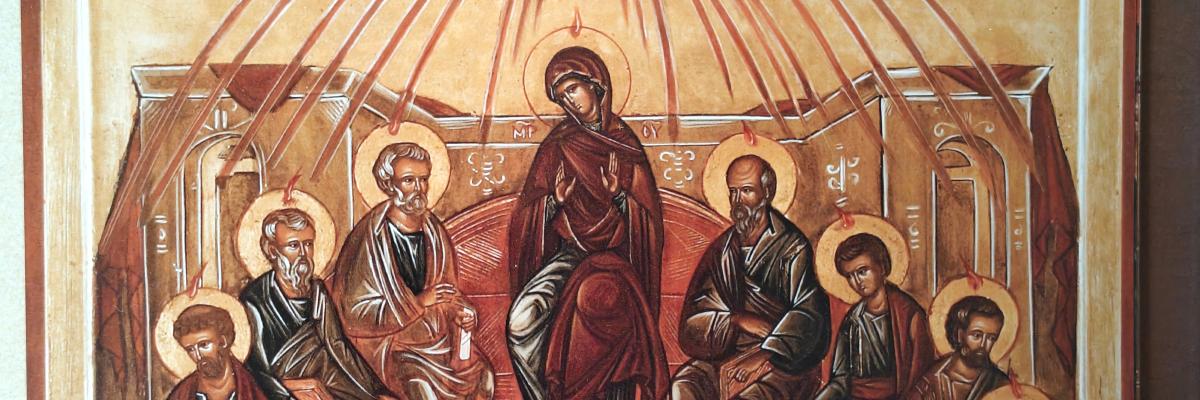
A Pentecost Reflection
Prof. dr. Pierre Devos s.j.
Chaplain Belgian Medical Association Saint-Luke
Reading and considering the texts that tell us about Pentecost shows a profound change in the attitude of the apostles and the first Christians. From a state of understandable fear as a result of the oppression they had suffered, they came out and fearlessly expressed their devotion to Christ. This change is not limited by the fact that they do not share the same culture, do not speak the same language. In reality, it is a message that touches deeply, that touches people's hearts, it is a universal message. For some unknown reason, the theologians who chose the arrangement of texts for the celebration of Pentecost deleted the last two verses of Luke's story in the Acts of the Apostles (Acts 2:1-11). Would they be too human, too recognisable? They were all puzzled and confused, saying to each other, "What does this mean? Others mocked them and said, 'They have drunk too much sweet wine!' (verses 12-13)
The Pentecost story, written by the evangelist Luke, is rich in visual and sensory elements, some of which may surprise us. This reinforces the perception that something powerful has happened and invites us to be attentive to these motions in our lives.
Speaking about the Holy Spirit is always a challenge and a trap. Can we trap the breath, the wind, in a bottle? We can hear him singing, whistling; we can feel inspired and go for it all the way. But it is up to us to steer the sails and hold the rudder of the sailboat to move forward as best we can.
In his account, Luke refers to the handing over of the Law to Moses (Exodus 19:3-8; 16-20), fifty days after the Jewish Passover. It is one of the great Jewish festivals when pilgrims from all backgrounds flock to Jerusalem. Thunderclaps, lightning, smoke and earthquakes accompanied the appearance of God and the handing down of the Law, the Ten Commandments. This Law was by no means meant to submit the believer, but to give him guidelines so that he would not return to the slavery of Egypt. They are guidelines for living as a free people: rejection of idolatry, respect for all ages, respect for life, for the given word, for other people's property. So many preconditions that make a free social life possible, but which are so often ignored today.
No doubt it is also good to celebrate Pentecost with powerful imagery: "a sound from heaven like a violent gust of wind" and "tongues of fire". The gift of the Spirit drives the disciples out of the confined space where they are gathered, just as a baby is driven out at birth in a wave of life, just as we are called to go to the periphery to be witnesses of the risen Christ, just as the Church is urged to step out of its confined spaces, freed from its fears.
After the reference to the Law given to Moses, Luke's account also brings us back to another Biblical image: Babel (Genesis 11:1-9). Babel is the mythical story that tells how man tries by his own efforts to reach heaven, dominate it, and build a unity-uniformity that would wipe out the difficulties of social life, the difficulties of understanding each other. Not only between peoples with different languages, but also between partners and within communities.
The unity to which the Spirit drives us is totally different. No diversity is wiped out. Each person is addressed in his own language, in his own life, in his own situation. This is what we can experience by meditating on Bible texts. When the Spirit begins to breathe in us, the text becomes a living word, a word addressed to us today, in our mother tongue. ‘Rejoice’; ‘Arise and walk’; ‘Follow Me.’ These words, spoken long ago to Mary, to Lazarus, to Peter, are now addressed to each of us: ‘The Holy Spirit will bring to your remembrance all that I have said to you.’ Not a nostalgic reminder of a distant past, but a living reminder of what God has done and continues to do, a reminder that sets us on our way, that takes us out of our limited sphere.
Photo header: Pentecost
by "Artisanat des petites soeurs de Bethléem"
bethlehem.org
1/7/2025
for Acta Medica Catholica 2025-1
Acta Medica Catholica 2025-1
Editor-in-chief Mr. Thomas Remy
Volume 94 (2025 semester 1)

Pierre DEVOS (ENGL) - The Spirit of Pentecost liberates us, unites in diversity and leads us away from fear

Bertrand GALICHON (FR) -The poor: invisible to society? Or restored in human dignity and trust through medical care?
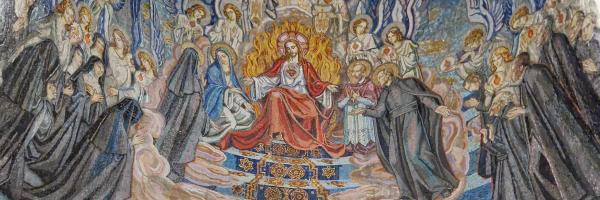
PEARLS of 'Emmanuel Médecins' in Paray-le-Monial 2025 (NL)- "Respect in Medical Care": a catholic perspective (Summary by S. De Smedt)

Joël ROCHETTE (FR)- How Mary can teach us to see everyday life as the building site for salvation history
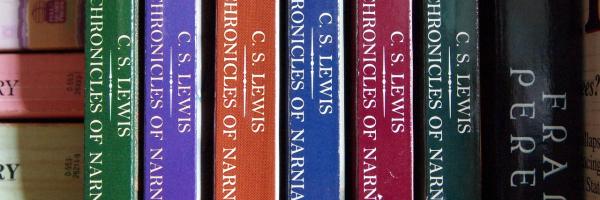
Kaat VANDEPUTTE (NL) - Evil and suffering, an argument against the existence of God? C.S. Lewis remains inspiringly relevant

Blandine HUMBERT (FR) - From darkness to hope: about shared suffering & fragility in medical care
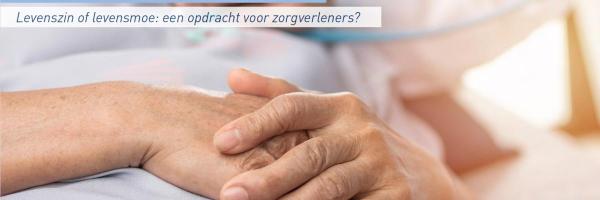
Jessie DEZUTTER (NL) - How finding purpose in life matters: hospital care for elderly

Samuel LIEGEON (FR) - In an age marked by artificial intelligence, how does the artist define true beauty?

Jonas ROOSELEER (NL) - In the footsteps of Franciscan spirituality: simplicity and attention to vulnerable people & to nature
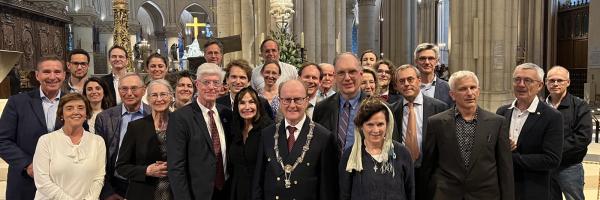
Côme BOMMIER (FR) - Beyond our political or scientific approaches in clinic, it's Love that gives meaning to our commitment