Hendrik PEUSKENS (EN)- About serenity to accept what cannot change, courage to change what can,& wisdom to know the difference
Finding meaning when one is ill
Prof. dr. Benoit Beuselinck
Oncologist UZ Leuven
As an oncologist, I was invited to deliver a speech on caring for palliative patients at the edges of our healthcare system. It’s a honor for me to deliver this speech and to talk about some admirable men of our recent history, and this, moreover in this very peculiar place dedicated to Father Damian. Cancer therapies are usually well reimbursed in Belgium and as such, poorer people also have access to cancer treatment. We are also for instance treating at this moment Ukrainian refugees. However, cancer patients are often at the edge of society, peculiarly when our society is driven by performance, autonomy and appearance, such as beauty, health and professional success. Many cancer patients report that their life and suffering are useless, without sense. At my feeling, this is more often the case in patients who previously suffered depressive disorders and in patients who are socially isolated, a condition which is becoming more and more frequent in Western societies. These patients combine several reasons why they are at the edge of society: they do not fulfill anymore the success criteria of our society (autonomy, performance, health) and they are socially isolated or weakened by their personal history.
The lack of meaning while ill, and its impact on live expectancy
The lack of meaning while ill can have an important impact on quality of life, and - in a country where euthanasia is allowed – even of life expectancy. Although the demand of euthanasia usually occurs in case of an underlying severe disease, several co-factors can motivate the demand, as shown by an analysis of euthanasia demands in our own university hospital and by the Federal Commission of Evaluation of Euthanasia. In fact, suffering is a largely subjective experience, where circumstances can worsen or alleviate the objective physical suffering. Psychological and social circumstances can give the underlying physical suffering a very different dimension. For example, the muscle pains felt after running a marathon can be physically identical to those induced by a car accident, but mental suffering will be absent. Fear of future suffering, existential suffering, including lack of meaning, fear to be a burden for others, social suffering, the impossibility to perform the activities one was used to do, autonomy issues are finally more often put in foreground compared to physical suffering when patients ask for euthanasia. Some promotors of euthanasia even want to see it applied in patients with ‘tiredness of living’ or with ‘fulfilled live’.
Hence, when patients experience a lack of meaning while struggling with their disease, and when this demand is not addressed, they are at the edge of our healthcare system. The World Health Organization, in 1946, defined health as a state of complete physical, mental, and social well-being and not merely the absence of disease or infirmity. Hence, mental well-being is important and I will try to show you that finding a meaning in life while ill is an important part of this.
But where can we find the necessary resources to respond to mental and existential suffering? The theories of Viktor Frankl seem to me a good starting point, since this psychiatrist devoted his entire career to empirical research on the meaning of life.
With Viktor Frankl, the question of meaning makes its entry into medicine
1905-1942: career in Vienna
Viktor Frankl was born in 1905 in Vienna. He became a doctor in medicine and a psychiatrist, with a focus on depression and suicide. He founded logotherapy (focusing in meaning of live and the rational capacities of men), the third Viennese school of psychotherapy, after Freud (focusing on the sub-conscient and the instincts) and Adler (focusing on power). Frankl knew Adler and Freud personally, he followed lessons of Freud. If we compare the human person to a house, Freud is looking a what is hidden: the cellars. Frankl is looking at the upper floors: rationality, will.
Between 1933 and 1937 he led the so called Selbstmörderpavillon of the general hospital in Vienna, where he treated each year 3.000 suicidal women.
During his consultations it is not rare for Frankl to ask his sick patients showing symptoms of depression why, all things considered, they do not commit suicide. The very divergent answers he gathered in the course of conversations with thousands of people allowed him, in “empirical” fashion, to identify the various reasons that make a person live. These reasons can be grouped into three categories: the meaning of accomplishment, the meaning of love, and the meaning of suffering. The meaning of accomplishment is the desire each one of us has to create a work or a good deed. The meaning of love is the in-depth discovery of something or someone; to experience the goodness, truth, beauty found in nature, or in a culture, or – better yet – to know the unique character of a human being through love. The meaning of suffering is the fact that despite or sometimes even through suffering, a person discovers new ways to develop himself and to grow: he is able to tackle suffering in a positive way.
As president of the Sozialistische Mittelschüler Österreich, he helped students with a special advice program. During his presidency, not any student committed suicide. In one of his investigations involving thousands of students, he shows that, for the majority of them, the most important thing is to find a meaning to life. Man needs to reach out toward a precise goal, to accomplish a freely chosen task. He must feel called to accomplish a task. Man is not pure instinct, his behavior is not entirely determined. He must find a meaning, a reason, a purpose for himself, at the risk of a sort of “existential frustration,” of which alcoholism, suicide, drugs, depression, and the fear of aging would be the most common consequences. The need to find a meaning of life is … quasi instinctive.
Thanks to the work of Viktor Frankl, the question of meaning is no longer just one of the main themes of philosophy: the question of meaning makes its entry into medicine too and becomes the axis of a new school of psychotherapy, logotherapy. Existential frustration can lead to “noögenic neurosis” that has its origin in the noös or mind. It is the state of malaise induced by the lack of meaning. The search for a meaning to one’s life can induce tension in man rather than inner balance. This tension is nonetheless indispensable to his mental health. Those who have a purpose in life are more likely to endure certain sufferings. Frankl quotes Nietzsche, who holds that “if we have our own why of life, we shall get along with almost any how.” This sense of accomplishment plays a role in psychological disorders which young unemployed workers for example have to face. In therapy sessions Frankl awakens transcendence in his patient, the capacity to rise above difficulties, thanks to his rational or spiritual powers. He carries out an existential analysis of the reasons that make a person live, but contrary to other European existentialists, Frankl is neither pessimistic nor anti-religious. He wants to weave the frayed threads of a broken life, to make it a model of meaning and responsibility.
"If we have our own why of life, we shall get along with almost any how" (V. Frankl)
1942-1945: Deportation to Auschwitz
As a jew, Frankl was deported to Auschwitz in 1942. His psychiatric career was brutally interrupted by three years of internment. Furthermore, he lost his manuscripts that contained the essentials of his thought that he was developing since the 1930s. However, this painful time in Frankl’s life, instead of amounting to a failure, was the keystone of his work: it confirmed his theories and proved that in every situation, as desperate as it may be, a meaning can be discovered.
In the camps, in the midst of indescribable suffering, Frankl discovered numerous occasions to give meaning to his life. Let us cite as sole example the moment when he decided to accept to care for those afflicted with contagious illnesses rather than the night work team, since “if I die, I prefer that it be by caring for the sick rather than doing useless work.” Another of his motivations was to continue working on his theories. Frankl is convinced that this desire helped him hold up. What is certain is that he was one of the rare survivors, whereas the SS who selected the newly arrived prisoners had hesitated a long while before accepting him as suited for work rather than sending him directly to the gas chamber.
Also, when they had worked, prisoners received tickets with which they could buy additional food (they received poor meals) or cigarettes. Those who wanted to survive had to take the additional food and not the cigarettes. Frankl observed that those who choose the cigarettes, died short afterwards, and deducted that in fact they had lost courage.
Frankl relates that in the very midst of the dullness of camp barracks the prisoners marveled at the beauty of a sunset. As regards they meaning of suffering, Frankl saw in the camps how many people were able to find a meaning to their life in spite of sufferings and, in a good number of cases, thanks to suffering. Suffering is obviously something to avoid as much as possible. But in the face of unavoidable suffering, one must develop an attitude that it can be assumed. This is possible according to Frankl. At Auschwitz he saw people “assume” their situation like heroes. Frankl likes to cite Dostoevsky, who said once, “There is only one thing that I dread: not to be worthy of my sufferings.” One must “optimize” suffering, profit from every situation, adapt, draw lessons. If suffering cannot be avoided, one must learn how to suffer.
This leads us also to the possible relationship between noös and our physiology and more in peculiar our immune system. In the camp, in at the beginning of 1945, some prisoners heard the news that the camp would be liberated by April 30th. They struggled to reach that day. But then, the camp was not liberated. They felt very discouraged. Some days later, they died from typhoid fever. It is very difficult to prove correlations between mental wellbeing and physiology. It is also dangerous, because some patients could develop culpability feelings against themselves or against family member, when they become ill or when a therapy is not efficient, while this can be in large part independent of mental wellbeing. However, I recently come aware of a publication on the association between pretreatment emotional distress and response on immune therapy in melanoma patients.
From 1945 on: further development of his theories
According to Frankl, meaning must be sought outside a man. A man must actualize himself, transcend himself in order to transform his capacities into practical achievements. He must seek a meaning outside himself, to love another by effacing himself, to serve another by relieving his suffering:
“Do not seek happiness or success. They will come when you do not expect it. Happiness and success are but the secondary effects of devotion given to a cause greater than oneself or of the abandonment one experiences for another than oneself.” (V Frankl)
Let me cite an example of an existential analysis of the reasons that make one live. Frankl asked a depressed sick man who had just lost his wife of 50 years what would have happened if he had died before her and she had been left a widow. “She would have died of grief,” he said. The man felt much better when Frankl told him that by accepting his own sadness he had spared his widow hers.
Likewise, one must not stop when “one expects nothing more of life.” Frankl cites the case of 17-year old boy who, following an accident, suffered a fractured cervical column and became a quadriplegic. He learned to live with his illness even to the point of taking college courses. He writes: “I view my life as being abundant with meaning and purpose. The attitude that I adopted on that fateful day has become my personal credo for life: I broke my neck, it didn’t break me. […] I believe that my handicap will only enhance my ability to help others. I know that without the suffering, the growth that I have achieved would have been impossible.”3
A man who suffers can find great comfort in the idea that he knows he is a unique person. Each one of us is unique and irreplaceable. No one can suffer in the place of a sick person. He alone can be strong and face his situation. It is up to him to accept it with courage and strength. With dignity too. And crying can be dignified. Crying can be a sign of courage, since the fact of crying can mean that one accepts to struggle “in spite of the despites, suffering makes us stronger. Nietzsche said it in a still more precise way:
“What does not destroy me, makes me stronger.”(Nietzsche)
No one knows what the future has in store for him. The prisoners, even if they had little chance of surviving, could not exclude finding happiness in a family or a job, in freedom. The past can also comfort the prisoner. No one can take from us what we have lived and done that is good. Our experience, the deeds we have done, the good thoughts we have had, all our suffering, no one can take from us. Even when these things will belong to the past, they will not be lost, since we have lived them. Death, inevitable as it is, must incite us to act in a responsible way in relation to life. A life is so many possibilities for us to actualize, to carry out the possibilities that are in us. At the end of life, we can look back and be satisfied of all that we were able to live and achieve.
This whole attitude in the face of suffering is made possible thanks to the inner freedom we retain whatever external circumstances confront us. This is the last – and no doubt the only true – human liberty: man’s capacity to choose his attitude and to assume it in the situations he is obliged to live. Man always retains this ultimate liberty, contrary to what Freud claimed. Within certain limits, man chooses his fate. Frankl insists that practitioners must humanize psychiatry by giving greater place and importance to freedom and human responsibility. “A human being is not one thing among others; things determine each other, but man is ultimately self-determining. What he becomes – within the limits of endowment and environment – he has made out of himself. In the concentration camps, for example, in this living laboratory and on this testing ground, we watched and witnessed some of our comrades behave like swine while others behaved like saints. And ‘Saints”, you can take it literally. Maximilian Kolbe was a Polish Franciscan priest, who was captured in Auschwitz because of his journalistic resistance to the Nazis. When another prisoner of the same group tried to escape from Kolbe’s barrack, as a punishment, ten men were condemned to death by hunger. Kolbe was not selected, but proposed to take the place of Franz Gajowniczek, a father of two children. The ten were isolated on July 31 of 1941. On August 14th, four men were still alive, among them Kolbe, and they were murdered by a deadly injection. In 1982, Maximilian Kolve was declared a martyr and a Saint of the Catholic church by John Paul II. Gajowniczek survived Auschwitz and was present at Kolbe’s canonization. Man has both potentialities within himself; which one is actualized depends on decisions but not on conditions.
Liberty does not exist without responsibility. This is why Frankl proposes to erect a Statue of Responsibility on the West Coast of the United States.
How to apply Viktor Frankl’s theories to the treatment of the sick
Now that we have some acquaintance with the theories of Viktor Frankl, we can attempt to apply them to the particular situation of patients.
To some extent, there is a parallelism between cancer patients and prisoners and even patients isolated at Molokai because of leprosy. They might be uncapable to continue their lives and work, are sometimes separated from their family members, and they do not know at all if they will ever survive and what future they will have. How can the sick find meaning to their life in spite of suffering and illness? Why do some among them feel their life is filled with meaning and want to go on living in spite of their trials? Why do other get discouraged and view their life as meaningless?
First path: self-actualization through love for the other
A number of sick people aspire to being around for certain family events, such as the wedding of a child or the birth of a grandchild. Others want to stay alive as long as possible so as to not leave their companion alone or to see their children grow as much as possible.
A 72-year old patient afflicted with prostate cancer had already received numerous treatments, including chemotherapy, when he suffered a relapse in October 2013. At that time his overall condition was already weakened because of his advancing illness and the preceding treatments. We discussed the possibility of starting a new chemotherapy treatment. The patient hesitated on account of his overall condition but told us that his daughter was getting married on July 26 of the following year and asked us if he would still be living then. We explained to him that it is always difficult to estimate life expectancy, but that, with a new chemotherapy, it was not out of the question. Without treatment, it seemed doubtful. The sick man decided to begin treatment and we explained to him that he would be able to stop it whenever he wanted. He received four treatments of chemotherapy through February 2014, when he asked for a pause on account of fatigue. In April he returned and received two more treatments. Then, he again asked for a pause. He attended his daughter’s wedding and on July 27 he was admitted to the hospital, where he passed on July 28. This man was clearly motivated to live until his daughter’s wedding.
Many people discover that an illness can be the occasion to deepen a relationship. We see many couples who, after a turbulent married life, find peace at the heart of their relationship and a renewed love when one of them falls sick and other begins, at last, to concern himself with his spouse. The man, when taken ill, asks if his wife can still love him in those new circumstances. The woman replies that “now is when it becomes interesting.”
The “suffering” of being a burden to others
Sick people often tell us that they fear being a burden for others. However, letting oneself be cared by others can do great good, as much to the person receiving care as to the one giving it.
Here is a conversation with a patient in the presence of his daughter: “Doctor, I don’t want to be a burden for my children.” – “Did you at one time care for someone who was sick?” – “Oh, yes, I took care of my mother for three years and my father for six months before they died.” – “Did that bother you?” – “Not at all, I did it with great pleasure.” Before I could tell her that it was her turn to be cared for, her daughter, in tears, took her mother’s feet and asked her if she could care for her.
It is not surprising that isolated sick people, with little family contacts, have a harder time finding a meaning to life than those who are well surrounded. Moreover, studies show that the survival rate of people afflicted with cancer is better among people who are properly accompanied.
In our practice, we also observe that requests for euthanasia come more frequently form people who suffer loneliness. Certain chronic family conflicts can also induce mental suffering. Unfortunately, these conflicts are often hard to resolve. It is not rare for sick people to request euthanasia, notably “because they no longer see their children.”
Letting oneself be cared by others can do great good, as much to the person receiving care as to the one giving it.
Second path: self-actualization through a life filled with meaning
Many people want to go on living, in spite of illness or treatment, because they esteem that their quality of life is reasonable and that they can still live good moments. These people plan weekends and trips between their chemotherapy treatments. Others are satisfied “as long as I can continue to smoke a cigarette” or “because I go cycling now that the good weather is here.”
This choice requires the patient to adapt his activities. He must not focus on what he can no longer do, but on the contrary find new activities. In the middle of one of the Syrian refugee crisis, one of our metastatic breast cancer patients started knitting hats. Another patient, without any family, wanted to go home in order to continue to make tiny bird houses.
One can also take up again those he had abandoned for lack of time, such as arranging photographs. This example is not a random choice. Youth is the time of life when one looks ahead. In advanced age or when illness strikes, there is not as much occasion to make plans, but one can have the joy of looking back on a life filled with beautiful moments. One can cherish memories with gratitude. Certain sick people tell us that “it is less difficult to leave, because I have had a life filled with activities and meaning.” No one can take from us the memories we cherish.
Nonetheless the fact remains that not all come to this point. This almost always happens in the case of people in depression. This is where the role of the doctor and the healthcare team is important. They can help the sick person and his family find meaning, on condition that the doctor and the caregivers do not avoid this question for themselves.
Third path: knowing how to face suffering
Two quotes of Viktor Frankl:
- «If you don’t expect anything anymore from life, maybe life is expecting something from you?»
- «When we are no longer able to change a situation, we are challenged to change ourselves»
It is important to struggle against the fear of physical suffering and the burden of treatment. This fear seems to have increased in recent years for several reasons. First of all, since we are less often faced with death, we no longer see that it has to do with a natural process. Another reason to fear is the extraordinary measures to prolong life that only exhaust a person with an ineffective treatment. Lastly, there are also the media that over and over again repeat that “since we now have euthanasia, we no longer have to suffer horribly.” This is how a terribly negative image of suffering is created.
"If you don’t expect anything anymore from life, maybe life is expecting something from you?"-Victor Frankl
In our daily clinical experience, removing these fears has a very calming effect on patients. We assure the sick person that we will not apply useless treatments. We let him know that his death will be induced for example by kidney or liver failure or a cerebral herniation that generally leads in a few days to a coma and then to a peaceful death. We assure him that we will always be able, in case of need, to apply a palliative sedation so that he will not live his agony consciously. In our university hospital 8% of sick people die with a palliative sedation. In New Delhi, in India, mobile palliative care teams help up to 20% of sick people to die with a palliative sedation. In this way the fear of not being helped in the terminal stage will be eluded.
A sick person, afflicted with cancer of the kidney with vertebral metastases leading to paralysis, continued following her treatment but regularly let us know in rather strong terms that she would later be requesting euthanasia. One day we asked her why she would request euthanasia. She replied that she feared ending up “like a vegetable hooked up to a breathing machine in intensive care.” We answered her that that was unlikely since, in general, admission to intensive care of sick people afflicted with metastatic cancer in advanced stage is difficult. When the underlying illness can no longer be treated, intensive case is meaningless. We moreover assured her that we would clearly note in her file never to transfer her to the intensive care unit and we reminded her that we did not resort to extraordinary measures to prolong life. I saw this patient’s face light up instantly. She told me that under these conditions she was no longer requesting euthanasia. A few months later we put an end to her anti-cancer treatment since it had become ineffective. The sick woman, at that moment paraplegic, was transferred to a nursing home near her daughter’s house. There she lived two good months and was able to go on several outings. She organized a party for her 70th birthday, surrounded by a hundred friends. Six weeks later her overall condition deteriorated. The end was at hand. At that point she reformulated a request for euthanasia. But she died a few days later, before her request could be met. In fact, she was already dying, after filling her last weeks of life with meaning, despite her paraplegia.
Describing the situation precisely and sincerely can also bring peace to the sick person. Good communication with the patient, regarding both his diagnosis and his prognosis, is a real challenge we need to take up. For many sick people uncertainty is very often worse than precise information, even if it is negative. With access to a good deal of data on the internet, they will quickly realize that the doctor has not given them accurate information. On the other hand, good communication, based on real facts, can truly help them know what they can still expect of life.
Illness can also help us again learn to live with what is provisional, as can be seen in cultures that are less stressed than ours. It is particularly difficult to live this dynamic of the provisional in a society that is always turned toward the future and that multiplies assurances of protection against everything that can’t be foreseen in life. Once someone is afflicted with a chronic illness whose course is uncertain, he needs to learn even more to live from day to day. Once sick people receive the harsh surprise of a cancer diagnosis, good surprises are still possible. They can respond to treatments even better than expected. Extended control of the illness is not excluded. It would be a pity to spoil one’s life by forging overly negative perspectives.
Recently an ambulance was seen in front of the house of one of my patients who was weakened by a cancer she had been suffering for several years. The neighbors came out and were worried about her. They were surprised to learn that she was a still alive, but that her husband, who enjoyed perfect health, had suddenly died of a pulmonary embolism…
Finally, doctors must also accept death as the natural outcome of illness and of every human life. After a long and onerous illness, death can be a relief. It is very interesting to read Thérèse of Lisieux’s autobiography on this subject: “Ah! What is the agony? It seems I am always in it… what should I do to prepare for death? Never will I know how to die! Is it today? What happiness if I could die right now! When am I going to suffocate entirely? I can’t stand anymore!” Thus, even a Doctor of the Church such as little Thérèse can at the same time wish to die and fear death. But it is true that she lived her agony at a time when palliative care was not as developed as it is today…
While many people do in fact find a way to accept suffering independently of any religious perspective, religion often alleviates mental and existential suffering. The faith of someone who firmly believes that God loved him personally, that He has written his name in the palm of His hand, and that He gave His life for him, does not see death the same way… However, some atheists also speak of their “spirit,” bring up the “world-soul,” discourse on the “desire for eternity.” Whatever we may think, we all have a grain of eternity in us, as John Paul II explains in Evangelium Vitae. This seed makes us aspire to total and enduring happiness. That is why death as nothingness horrifies us. For the believer, death becomes a passage … to another and very mysterious way of living. Based on my experience I observe that believers in general die more serenely, although they can be affected by penultimate anguish, which is in a part a physiological occurrence.
When we go a step further, we can even participate in Christ’s salvation, like Simon of Cyrene was asked to carry the cross with Him … And this suffering for Simon of Cyrene came to him as a surprise, when he didn’t expect it … But even if we can participate in Christ’s salvation, we should not fall into “dolorism” were we go looking for suffering. Suffering has to be avoided whenever possible. In order to avoid misunderstanding, I prefer to say that sick people ought not to find meaning to their suffering, but instead a meaning to their life in spite of suffering.
In a country where euthanasia is decriminalized
As shown above, the most frequent reasons people have for requesting euthanasia are the fear of seeing their health deteriorate, of becoming dependent and cared for by another, of suffering in their final moments, of no longer being able to do what they had been doing… It is rather a matter of metaphysical suffering, beyond physical suffering. Let us take for example an elderly person in a retirement home who is incontinent and losing sight.
It is important to show these people that while there is no longer a way to add days to their life, there is a way to add life to their days, and that’s precisely the definition of palliative care.
"While there is no longer a way to add days to their life, there is a way to add life to their days, and that’s precisely the definition of palliative care"
The last phase of their life can still be filled with meaning: to sense the comfort given by caregivers, to experience family reconciliation, etc. This is why caregivers and family members must draw on their imagination, day after day, to make the life of sick people agreeable. The mission of palliative care can be summarized in two Latin words, consolare et sedare, to bring consolation and peace. This peace must be not only physical, but mental, spiritual, and social as well. The question of meaning, present in every man all through his life, must also be taken into account in these final moments. Palliative care will respect the natural course of the illness that will lead the sick person toward his death, without either precipitating it or retarding it uselessly. It is appropriate that the family and the healthcare personnel deploy all their means, with imagination and love, in order to fill these last moments of life with meaning as an ultimate possibility to self-actualize, a last possibility to grow, a last instant of humanity and love, giving a meaning to these moments.
Nous remercions l'auteur d'avoir mis à notre disposition ce compte rendu de sa conférence à Leuven pour Acta Medica Catholica 2024-2. Onze dank gaat uit naar deze auteur die het verslag van de lezing in Leuven ter beschikking heeft gesteld voor Acta Medica Catholica 2024-2.
Soins aux personnes en marge – 2024 Leuven
This article was previously published in Acta Medica Catholica 2024-2
(paper edition)
Dit artikel uit ons tijdschrift wordt gratis ter beschikking gesteld. Om verder te lezen, moet u geabonneerd zijn en ingelogd. U bezoekt deze pagina als gast en bent nog niet ingelogd. De financiële steun van onze abonnees is een waardevolle hulp voor onze werking! Hartelijk dank!
Verder lezen als abonnee
Verder lezen als gast
Terug naar STARTPAGINA
Acta Medica Catholica ARCHIVES
Read a selection of previously published articles taken from our journal "Acta Medica Catholica-paper edition” below.
Harko IJKEMA (NL) - If sex has become addictive: insights from an addiction therapist

Pascal IDE (FR) - Addiction: dissociation between object and pleasure; artificial paradises and drugs as a substitute for Eternal Life
Benoit BEUSELINCK (EN- One may not add days to life, but one may add life to days
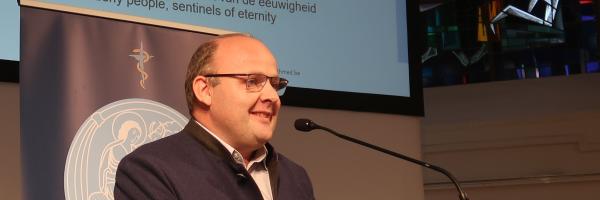
François TRUFIN (FR) - Old age keeps watch at eternity’s door, calling us back to what truly matters

Lotte VOETS (ENG) - Compassionate Dutch palliative care honors dignity and unique needs of people with intellectual disabilities