Guillaume GIROUL (FR) - In this edition: Finding balance between AI & human dignity, between performance & resiliance

AI and the Future of Medicine: Function and Vocation
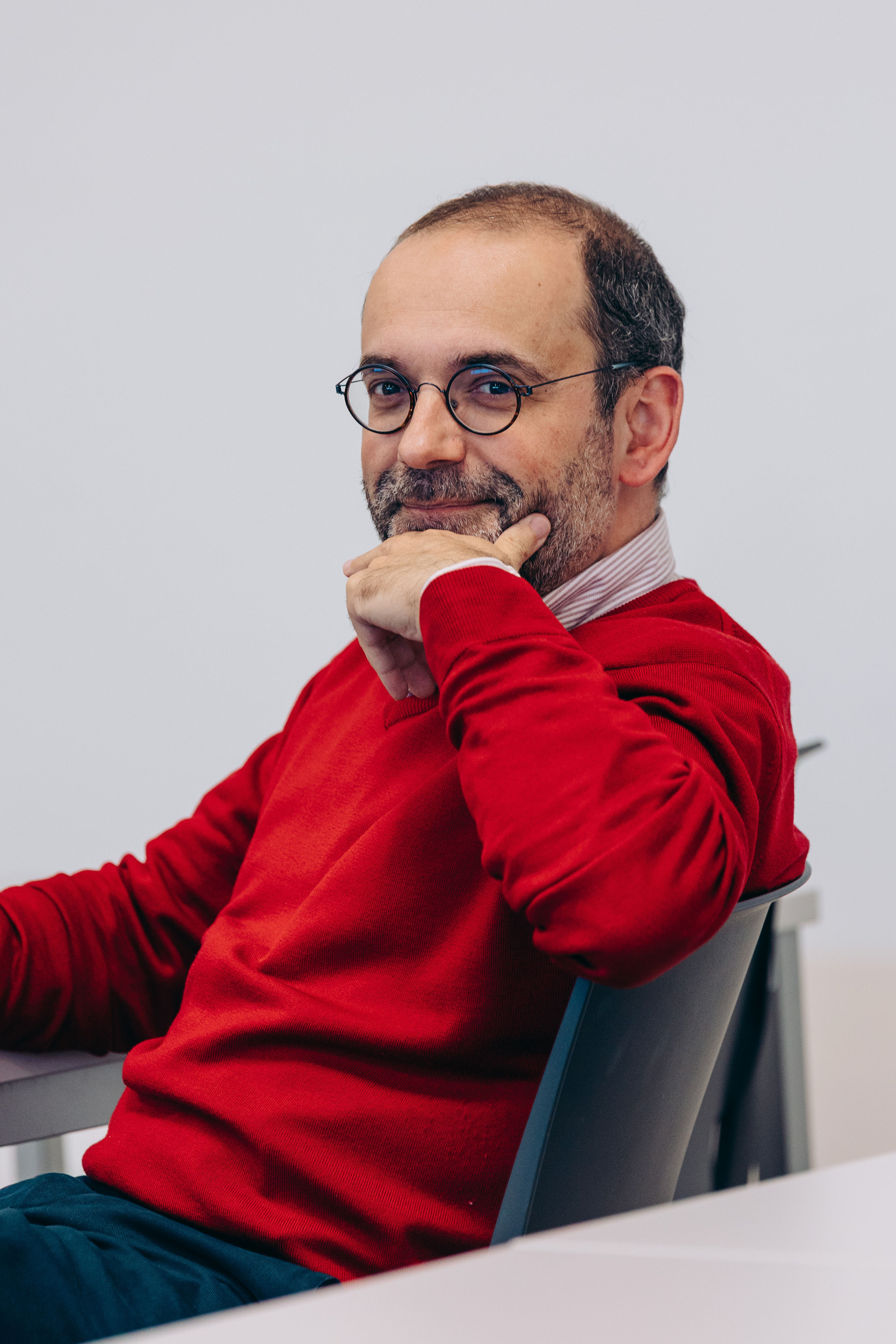
Prof. João Santos Pereira
Associate Professor of Biostatistics (Centro Interdisciplinar de Investigação em Saúde)
and Executive Director at Católica Medical School, Universidade Católica Portuguesa
Lisbon, Portugal
Lecture given during the conference “AI and medicine: the challenge of human dignity”, organised by Pontifical Academy for Life and International Federation of Catholic MedicalAssociations (FIAMC), November 10-12-2025, Rome
Introduction
The recent evolution of Artificial Intelligence (AI) is certainly astonishing. The potential impact is vast across all areas of human knowledge, with Medicine being one of the most frequently cited examples. The future of clinical practice, according to the resident futurists, is almost entirely digital, from hospitals to exams and diagnoses, all with minimal human intervention. It is predicted that very soon, with estimates ranging from just a couple of years to a few decades, we will have a reality where doctors will be almost unnecessary. Is that really the case? It doesn't seem so to me.
Generative AI
First of all, in the growing noise surrounding AI since the advent of ChatGPT, it has been very difficult to separate what is true from what is merely propaganda, even if well-intentioned. The big recent novelty is the concept of "generative AI": more than just classifying or analyzing data, as older methods did, this version's main objective is to create or generate new content - be it text, image, sound, code, or other data formats - based on patterns learned from existing databases. As such, generative AI uses data patterns to synthesize and produce something "new".
The history of AI
The recent results are impressive, but we must not forget that there have already been several periods of great enthusiasm for this type of technology, only to be followed by disappointment. It started as early as 1956, when the mythical conference organized at Dartmouth College by John McCarthy first coined the term "Artificial Intelligence" (a term that was not consensual, incidentally): it was then thought that a group of 10 scientists working for a summer would be able to solve most of the problems that are still open today. Extraordinary proposals such as modeling the entire human vision system by a single student in a few months' internship were discussed. It was quickly realized that things were not so straightforward.
Progress was made, albeit with significant delays. The "AI winters" are noteworthy - so named because they were periods of reduced interest and funding in the area after reality fell far short of the expectations created - between 1974 and 1980 and then between 1987 and 2000. Nothing guarantees that another one is not awaiting us.
Perhaps this time is different, however. Moore's Law, observed since the 1960s, states that the number of transistors on a computer chip doubles every two years. Roughly speaking, this implies that the chip's speed also doubles over the same period, suggesting exponential behavior. Various sources now claim that this law, when applied to AI algorithms, shows a doubling every 7 months - and some even suggest half of that. Exponential growth of this magnitude is beyond any human capacity for understanding, let alone regulatory monitoring or applied technologies. The potential for disruption is, therefore, immeasurable. At this rate, in a decade we will be at levels of capability and complexity of AI systems on par with the most ambitious science fiction, right?
Barriers to the growth potential
No. This is where things need to be tempered. Extrapolation is a cardinal sin in mathematics. "Since something has behaved like this until now, it will behave the same way hereafter" is a mistake that has led to the financial and technological ruin of many optimists. Even the original Moore's Law no longer applies due to physical limitations in chip construction: after all, there is a minimum size for everything. There are real barriers to the growth potential of these new generative AI algorithms, ranging from the energy expended to the quantity of quality information needed to train them. Additionally, it is important to see what kind of evolution we are talking about: these algorithms are not intelligent and do not think like a human being; they only interpolate and associate existing data points based on probabilistic models. Well, this "only" is not quite appropriate, as they do it very well and with enormous utility for the most varied purposes.
Still, have you tried picking up your phone and writing a text message using only the words the program suggests? I just did it, and the result was this: "And my brother also doesn't let me take the test and then I don't know how I'm going to manage to be working" - syntactically and semantically, there is nothing wrong here, although I don't have a brother and am not taking any test. The example may be absurd, but this is what ChatGPT does, albeit on an extraordinarily broader and more complex scale. Still, there are elements of context and, more importantly, reasoning that are not contemplated. In medical terms, this can be very serious.
Enthusiasm without barriers
This enthusiasm without barriers has infiltrated everything related to AI. The most fervent proponents, many from Silicon Valley and surrounding areas, propagate prophecies with the zeal of the converted and, worse, with airs of categorical scientific certainty. We have historians writing books where engineering terms are misused and employed to expose doctrines instead of science. We have entrepreneurs and investors who advertise themselves as apostles of the new, sole religion, transhumanism, which will lead us all to a technological and digital paradise where disease, war, and death are unknown. The great messianic event, referred to as the "singularity," is just around the corner: we will then witness the birth of an AGI - artificial general intelligence, immensely more powerful than the mere human brain and, perhaps, self-aware. The list continues, in inverse proportion to the authors' humility and, I dare say, sanity. In this scenario, therefore, there is no shortage of those who say that Medicine's days are numbered.
AI in Medicine
Are there functions within Medicine that, because of AI, may change, some even ending entirely? Undoubtedly. This is part of the natural evolution of science and its methods. Various technical and operational tasks, from standardized procedures to analyses and diagnoses, may become increasingly automated. Here, it is important to emphasize that, probably inmost cases, we will be talking not about generative AI, but rather about expert systems. These systems have a core set of rules, from validated clinical guidelines and facts, which they cannot deviate from or "hallucinate," unlike their more imaginative generative AI cousins. Clinical decision support systems are already widely used, and it is natural for them to become more common as they also evolve and become simpler to integrate into existing processes. New generations of doctors, more open to this digital intrusion into their working methods, will be key in this evolution.
Automatization of operational tasks
A growing integration of technology into medical practice is inevitable. Just as in recent years there has been greater access to complementary diagnostic methods, there will also be increasing reliance on AI algorithms to assist in more complex diagnoses and other tasks. These tools are capable of analyzing large databases and identifying patterns that may escape the most experienced clinician, suggesting new avenues to explore. Additionally, the robotization of more routine procedures, particularly in surgeries, may lead to greater efficiency in the use of surgeons' time. And we must not forget that administrative processes, such as the simple entry of data into a computer or recording an anamnesis, can be substantially relieved with the use of AI. This is to say nothing of the entire impact on research, the discovery of new molecules and development of new drugs, laboratory analyses in simulated "in silico" environments, etc. Trying to stop this trend is like trying to stop the wind with your hands.
Good clinical practice remains key
Also, at the beginning of the 19th century, when English weavers began to be replaced by machines, the Luddite movement emerged, vandalizing the machines and trying to impede the heavy movement of progress. The term "Luddite" nowadays means someone who tries, uselessly, to refuse the introduction of new technologies and stop, or even reverse, the direction of time. There was, however, a positive side to this movement, which was the concern for the quality of the final product and working conditions. On these points, there should be no concession. However much we may be proponents of progress, we cannot justify an "anything goes" attitude with it. In particular, no effort should be spared to ensure that good clinical practice is not swept away in the flood of technological enthusiasm.
Vocation of the medical profession
In the case of Medicine, this implies a clear separation between what the functions of the doctor are and what it means to be a doctor, i.e., the vocation. The medical profession presents important human challenges, beyond all the well-known cognitive ones. Few professions demand a sincere vocation on the part of those who practice them more than Medicine. This vocation involves emotional and ethical aspects - the pathos and ethos that need to balance the logos of knowledge. It is necessary to have empathy, know how to listen actively, know how to lead, communicate, and collaborate. One must know how to be an academic and a professional, as well as an advocate for health issues and ensure that there are no confusion and misinformation. A doctor must seek to establish a sincere bond with the patient and have the capacity to deal with clinical ambiguities. Finally, one must know how to make decisions based not only on data but also on values and principles. The part of knowledge is always in the middle here, although always as an ingredient and not as the sole pillar.
The medical vocation involves emotional and ethical aspects - the pathos and ethos that need to balance the logos of knowledge.
The medical doctor in the loop
The gains in time and efficiency allowed by AI should be leveraged to enable greater dedication to these irreplaceable human aspects. A doctor has the capacity to understand the patient's anxieties and needs, something that AI cannot replace. Added to this is the fact that a patient often needs a human presence to feel safe and welcomed, especially in moments of vulnerability. A doctor must also serve as a filter to impose limits on algorithmic recommendations, which is particularly important in complex dilemmas. In other words, AI can never replace the doctor, not only because the human component and ethical judgment are essential, but also because the professional responsibility will always lie with the doctor. With the advancement of the automation of technical functions, the development of communication, ethics, and empathy throughout medical school gains even more relevance.
AI as collaborators in their own right
The future of AI lies in complementarity and collaboration with humans. This does not mean that these systems are merely support tools, however. One must not make the mistake of thinking that an AI system has a utility model similar to a calculator or an ultrasound machine, as we would then be losing much of the potential that these technologies can offer us. These systems should be viewed as collaborators in their own right. In fact, the emergence of AI agents will make this collaborative expression even more significant. These agents are autonomous programs that can perform various tasks and make decisions on their own based on a more or less specific set of instructions. The next advancements in AI will be very focused on this field, which largely surpasses the usual interface that solicits a prompt. We will be placed face-to-face (in a way) with another entity, even if not conscious and perhaps not very intelligent, but certainly very competent. Here we enter a more exploratory and even challenging domain, but that is what the future is asking of us.
Improving efficiency allowing more time for vocation
Not a replacement for doctors, but rather greater efficiency in their functions and a potentialization of their vocation through the various tools available. Vocation comes from "being called". Here, doctors are being called to perform their duties with a broader and even humbler vision of Medicine. With AI, the 4Ps of medicine - predictive, preventive, personalized, and participatory - proposed in 2004 as a vision for the future of clinical practice can, finally, rise to another level of realization in daily practice. More than absolute repositories and rulers of the vast medical knowledge in their fields, doctors will be pivots that connect the human world to the digital and to various other health professionals, interacting with autonomous AI agents and with frightened patients. Doctors will have to understand the preferences of the latter to adjust the recommendations of the former; they will have to define and defend ethical barriers, daring to assume the final responsibility after analyzing everything; and, finally, they will have to gain and maintain the trust of their collaborators, peers, and patients throughout the entire process. This is no small feat.
Importance of medical education
This also implies a new vision for medical education and the need for lifelong knowledge updating. Future doctors will need to know how to interpret data and understand how algorithms work in order to critically evaluate the suggestions they provide. It is not enough to "press the button" and wait for an answer: there will be a need for interaction, iteration, and collaboration. One must understand that computers and algorithms have limitations, operate based on various assumptions, and require a set of conditions, more or less rigid, for the results to be reliable. Does this mean a doctor will have to transform into an engineer? No, but a doctor will have to know how to converse with an engineer from an informed basis in order to participate in the design of this new world.
Future doctors will need to know how to interpret data and understand how algorithms work in order to critically evaluate the suggestions they provide.
Regulation and governance
The implementation of AI systems in clinical environments presents complex issues that will have to be managed by doctors. Topics such as data privacy and security will become increasingly important, requiring informed decisions by those who know and not just general recommendations by legal experts. Ensuring equity in access to the various tools that emerge will be another major challenge that will fall upon all health professionals, with emphasis on doctors. That is to say, a doctor will not be able to be just a passive user, but rather an experienced and participatory one, being involved from the development to the implementation and utilization of these AI systems.
Openness and transparency
In fact, it won't just be doctors who need to know how to deal with other areas of knowledge. All professions will be challenged to do so. It has already been demonstrated that the use of AI as problem-solving support allows for a more interdisciplinary approach, preventing highly specialized teams - in any field - from confining themselves excessively to what they master. There is, therefore, an invitation, more than a requirement, for greater openness of approaches, methods, and knowledge. Those who accept it will see that functions will not have such a rigid presentation and may find a fluidity in their clinical practice. There will, effectively, be more space for vocation to find its voice by thus escaping, at least in part, the yoke of function and "functions".
"The medical professional who will stand out in the future is the one who combines technical mastery with vocation and manages to integrate technology and human sensibility to offer more precise and welcoming medicine."
ChatGPT told me this when I asked it what it thought of the title of this article. I couldn't agree more. The advent of AI technologies in Medicine should be received with the hope that there will be more space and time for vocation, for Hippocrates and for Asclepius, for the heart and for service, simplifying and automating everything else. As for the fears, we can and should remain calm. Does anyone remember when Ford said, in 2017, that it would produce fully autonomous cars without a steering wheel starting in 2022? And how many times, in the last 20 years, has it been said that radiologists would be out of a job due to automatic image analysis? I have little doubt that, even many years from now, we will see radiologists going to their job at the hospital driving a car that depends on the driver, no matter how AI-powered it may be.
The advent of AI technologies in Medicine should be received with the hope that there will be more space and time for vocation, for Hippocrates and for Asclepius, for the heart and for service, simplifying and automating everything else.
Conclusion
To conclude, I ask all doctors and medical students reading this article to really think about what it means to be a doctor. Remove all inherent functions and tasks, the thousand and one details of clinical practice, the white coat and the stethoscope, the office and the examination table, the challenges and the rewards. Remove all of that. Go back to the origin, to the first moment you felt that this could be your life choice. To that first inclination and suggestion. Can you hear it? That is the vocation. No one can take that away from you.
photo header: thisisengineering-ptnm45ozkcw-unsplash
10/11/2025
for publication in Acta Medica Catholica 2025-2
Message of Pope Leo XIV to the congress participants on AI
William DE SMEDT - Jonge arts noemt congres in Rome groot succes
Joao PEREIRA - AI and the Future of Medicine: Function and Vocation
Yves POULLET - Dignité, IA, neurotechnologies et secteur médical
Dominique LAMBERT - IA et la relation patient-médecin: entre progrès technique et ethique du soin
Christina KOENES - AI may be a tool of care, but it can never be a bearer of care
Dit artikel uit ons tijdschrift wordt gratis ter beschikking gesteld. Om verder te lezen, moet u geabonneerd zijn en ingelogd. U bezoekt deze pagina als gast en bent nog niet ingelogd. De financiële steun van onze abonnees is een waardevolle hulp voor onze werking! Hartelijk dank!
Verder lezen als abonnee
Verder lezen als gast
Terug naar STARTPAGINA
Acta Medica Catholica 2025-2
Editor-in-chief Mr. Guillaume Giroul
Volume 94 (2025 semester 2)

Pierre DEVOS (FR) - God reaches out to humanity, inviting us to spread real love around us

Pope LEO XIV (ENG) - AI must never detract from the personal relationship between patients and healthcare providers

William DE SMEDT (NL) - Artificial intelligence is advancing in healthcare. What challenges does this create?
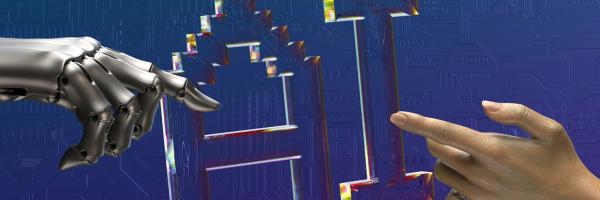
Intelligence Artificielle et la relation patient-médecin : entre progrès technique & éthique du soin
Dominique LAMBERT (FR) - Physicians are not just biotechnicians, they are guardians of suffering humanity
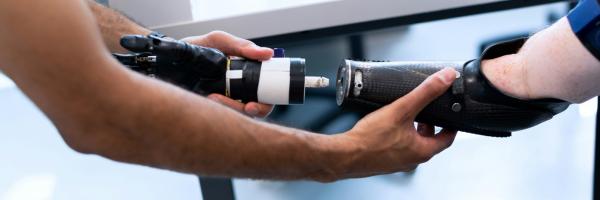
João PEREIRA (ENG) - AI creates more efficiency allowing more time for human aspects of medical practice
Yves POULLET (FR) - What does the patient's right to dignity mean in the face of increasingly invasive technologies?

Christina KOENES (ENG) - Can artificial intelligence serve me in serving my patients?

Ellen VAN STICHEL (NL) - Recognising our human dependence and vulnerability leads to trust and surrender

Simon ABSIL (FR)- General practice: a robust form of medicine based on continuity, flexibility and responsiveness to the unexpected

Jonas ROOSELEER (NL) - Small gestures and quiet individual choices allow care to become a place where community grows

Bernard SPITZ (NL)- A balance between work, rest and relationships is necessary for healthcare that supports and offers hope

Kardinaal Willem EIJK (NL)- Virtues and inner spirituality help Christian healthworkers to nourish their vocation (Summary by S. De Smedt)

Nathalie SALEE (FR)-I believe dignity does not depend on medical conditions but on the very fact of being a person

Marleen VANDERSTUYFT (NL) - Let us try to see patients through Jesus' eyes and love them as He showed us